
By Sania Birla, Founder & Creative Director, Saba Decor Rentals
Indian wedding events usually come down to four big ones: the mehndi, the sangeet, the ceremony and the reception. They don't feel alike, and the decor shouldn't either. Mehndi is relaxed and full of color. Sangeet is a party, and the stage carries it. The ceremony is sacred, centered on the mandap. And the reception? That's your most polished night. Plenty of families add a haldi, a garba or a welcome dinner on top.
I've been designing for 15 years. Here's how I handle each event so the whole weekend hangs together.
Key Takeaways
The four main Indian wedding events are the mehndi, the sangeet, the wedding ceremony, and the reception.
Each event needs one focal point: floor seating for the mehndi, the stage at the sangeet, the mandap for the ceremony and the couple's stage at the reception.
Carry one palette or design thread through everything.
Plan room flips early when two events share a venue.
Every region and every family does things a little differently, which is why I'd sit down with both sides and agree on the full list of events before anyone starts on decor.
Event 1: The Mehndi
The mehndi is when the bride, and often the women of both families, get henna applied to their hands and feet. It's usually held a day or two before the wedding, and it feels like a long, happy afternoon with music and food.
I design a mehndi around sitting, because guests end up on the floor for hours while the henna goes on. So I start with cushions and bolsters and usually add a swing or some kind of statement seat for the bride. Henna artists work slowly and carefully, and they need shade and steady light to do it well. Once those basics are covered you're free to go bright, and marigolds and playful props feel right at home at a mehndi.
Our mehndi and haldi decor guide has detailed setup ideas.
Event 2: The Sangeet
The sangeet is the music night. Families perform choreographed dances, friends give toasts, and the party usually runs late. In some families it's combined with the mehndi or the garba.
Everything starts at the stage. Performers need a strong backdrop, good light and room to move, and guests need to actually see them. Lounge seating around the edges gives people somewhere to sit between performances. Real setups are in our sangeet gallery.
For stage, backdrop, and lighting ideas, read our guide to sangeet and reception decor ideas.
Event 3: The Wedding Ceremony
Everything else in the weekend leads up to the ceremony. In a Hindu wedding it takes place under the mandap, around the sacred fire. In a Sikh wedding, the Anand Karaj takes place in a gurdwara, with the couple circling the Guru Granth Sahib. Many couples also hold a baraat, the groom's procession, just before the ceremony.
My rule here is rituals first, beauty second. For a Hindu ceremony that means the mandap, the havan kund, seats for the couple and parents, and a clear aisle. An Anand Karaj works differently. The gurdwara's guidelines come before anything we'd like to do, and the decor usually focuses on the entrance, the palki sahib area and the reception that follows. Our mandap guide and our Sikh and Hindu wedding decor guide go deeper on each.
Our South Asian wedding packages are built around this event, with the mandap, draping, and traditional seating included.
Event 4: The Reception
The reception is the couple's first evening as a married pair, and for many families it's the largest event of the weekend. It usually includes a grand entrance, speeches, dinner, and dancing.
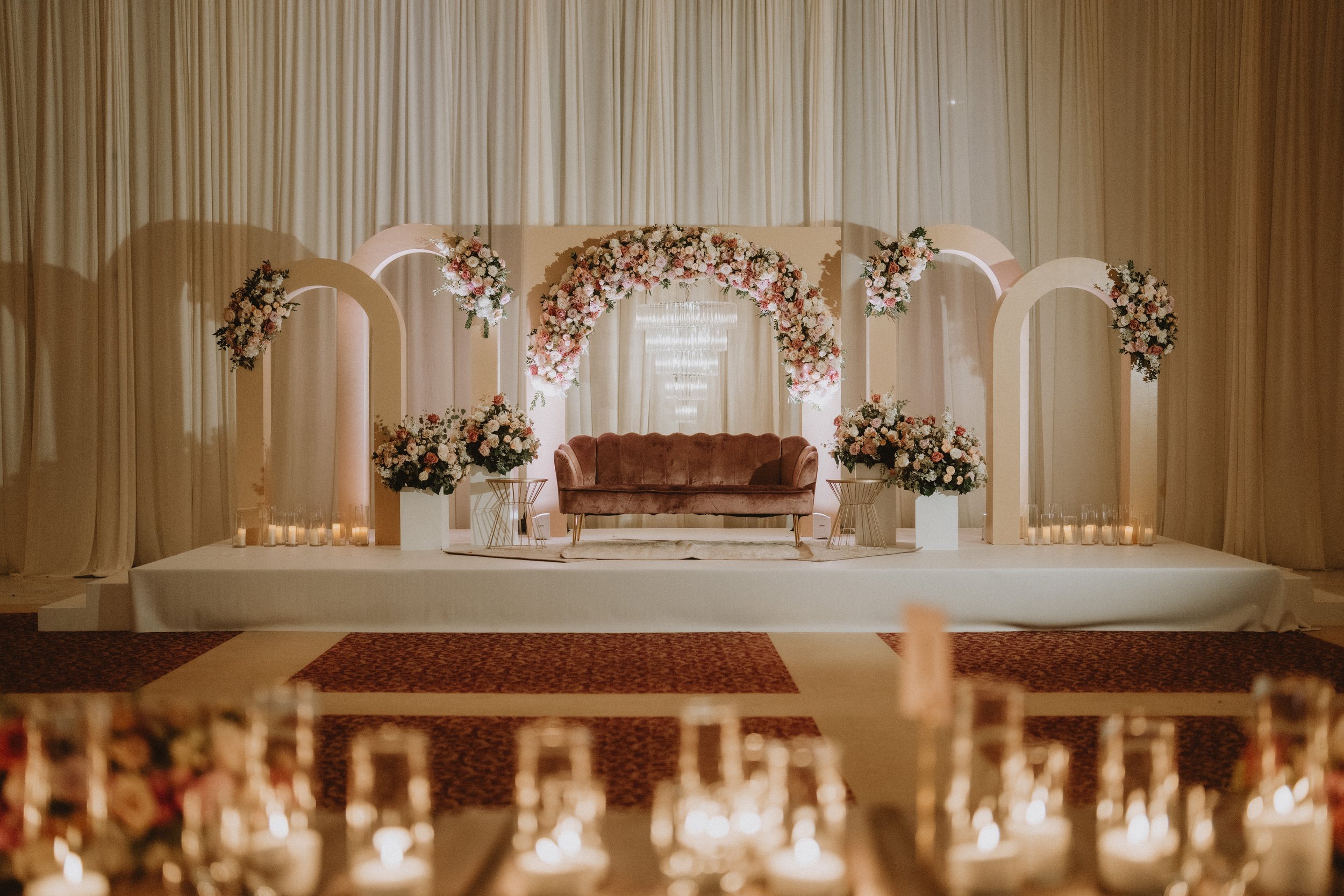
Bring out your most polished look. A couple's stage with a statement backdrop, elegant tablescapes, draping, and lighting that moves from dinner to dancing. See examples in our reception gallery.
How to Tie All Four Events Together
Four events can easily end up looking like four different weddings. A few habits stop that from happening.
Pick one palette family. Not one color. Jewel tones at the sangeet and soft neutrals at the reception can still share an accent shade or a floral style.
Repeat a signature. A flower, a fabric, a way of lighting the room. Let it turn up at every event.
Plan room flips. When the ceremony and reception share a venue, the room may have only a few hours to change over. Settle the flip plan with your venue and your decor team early.
Use one design team. This is the one I'd push hardest. When the same people design every event, the details carry through without anyone forcing them. It's exactly why we design decor, rentals and florals together.
If you'd like the event-by-event rental list, our checklist of what to rent for an Indian wedding covers seating, tabletop, and ceremony items for each function.
Bring Us Your Event List
Bring your event list and your family traditions to a consultation, and we'll design every function as part of one celebration. Book a showroom visit at our Fremont studio and we'll start there.
Frequently Asked Questions
How many events are at an Indian wedding?
There are usually three to five main events, though the number moves around quite a bit. The mehndi, sangeet, ceremony and reception make up the usual core, and a lot of families add a haldi, a garba, a religious puja or a welcome dinner on top of those, so your final count really comes down to your own traditions.
What are the 5 days of an Indian wedding?
Honestly, there isn't a fixed five-day schedule. A common pattern spreads the haldi, mehndi, sangeet, ceremony and reception over three to five days. Plenty of Bay Area couples fit it all into a long weekend.
What do they do at Indian weddings?
Guests usually enjoy henna at the mehndi, music and dance performances at the sangeet, the religious ceremony, and a reception with dinner and dancing. Each family adds its own rituals.
What are the 7 steps in an Indian marriage?
You're thinking of the saptapadi, which takes place during a Hindu wedding ceremony. The couple take seven steps together and each one stands for a separate promise about their married life, though the customs around it differ from one region, and one family, to the next.
About the Author
Sania Birla is the Founder and Creative Director of Saba Decor Rentals, a Fremont-based studio founded in 2016 that designs South Asian and fusion weddings across Northern California. Sania brings 15 years of design experience and leads a team that brings decor, rentals, and florals together under one roof. Read more about Sania.
